23 Signs You Grew Up With Ehlers-Danlos Syndrome (EDS), often feels like a childhood full of unexplained challenges. You may have been unusually flexible, tired easily, or experienced joint hypermobility that others called being “double-jointed.” Simple activities might have caused frequent injuries, sprains, or chronic joint pain without clear explanation.
Some kids develop soft or “velvety” skin, bruise easily, or notice poor wound healing, while others struggle with dizziness, fatigue, or digestive problems. Many of these signs are subtle, so you might have felt different from your peers or like the “sick kid” constantly misunderstood by teachers or doctors.
Recognizing these patterns can help you understand your childhood and guide proper care.
Understanding Ehlers-Danlos Syndrome (EDS)
Ehlers-Danlos Syndrome is an inherited condition caused by a genetic mutation that weakens collagen, the protein that keeps your tissues firm and stable. When collagen is fragile your joints move too far, your skin stretches too easily, and your organs may not function as expected. This is why doctors call EDS a genetic connective tissue condition. It affects your entire body, not just your flexibility or skin, and its symptoms often start in childhood. Many Americans discover they have EDS late in life because early signs blend into daily routines and look like unrelated issues, especially when doctors mislabel symptoms as anxiety or poor fitness.
There are several types of EDS, like hypermobile EDS (hEDS), classical EDS (cEDS), and vascular EDS (vEDS), and each one shows different patterns. Hypermobile EDS is the most common in the USA and often overlaps with joint hypermobility syndrome, symptomatic hypermobility, and hypermobility spectrum disorder. The vascular type is rare but more serious because it can affect heart problems, aortic aneurysm risk, and fragile blood vessels. No matter the type, every form of EDS can bring chronic pain disorder symptoms, frequent injuries, and lifelong challenges. Understanding the condition gives you a language for experiences you once struggled to explain.
The Most Common Signs You Grew Up With Ehlers-Danlos Syndrome (EDS)
When you look back at your childhood, you might notice patterns that seemed normal at the time but now clearly point toward Ehlers-Danlos Syndrome. Many children with joint hypermobility, double-jointed limbs, or constant injuries grow up believing their experiences are universal. They often feel confused when others say running is easy or when friends bounce back from sprains in days while they struggle with weeks of discomfort. Because EDS is a connective tissue disorder, it affects the structure of everything in your body, so early signs show up in movements, posture, pain levels, and how your skin reacts to even small bumps. You may remember popping joints to entertain others, coping with strange aches, or avoiding activities that made your body feel unstable.
Adults who reflect on childhood symptoms of EDS often see how teachers, doctors, and even parents misread the clues. A child who moves strangely is labeled awkward, and one who experiences frequent injuries is called reckless. A kid who reports chronic joint pain gets told it is only growing pains, and one who overheats or feels dizzy may be accused of being dramatic. Many people later realize they were living with a chronic pain disorder, subtle orthostatic intolerance, or early POTS symptoms without anyone noticing. This is why so many Americans seek answers as adults because their early signs were missed or misunderstood. Recognizing these clues now helps build a full picture of what growing up with a collagen disorder actually feels like.
Joint & Musculoskeletal Signs You Probably Experienced
Growing up with Ehlers-Danlos Syndrome often means your joints behaved in ways other kids’ joints simply didn’t. You may remember family members laughing when you showed off little “party tricks” with joints, bending your fingers backward or twisting your arms farther than seemed normal. Many people with joint hypermobility later realize they weren’t just flexible; they were living with a genetic connective tissue condition that caused their ligaments to stretch too easily. This extra movement often led to joint instability, frequent subluxations, and even full joint dislocations from small motions that barely affected others. You may recall hearing constant joint popping or clicking, or noticing you had hyperextended knees or elbows that wouldn’t stay straight without wobbling. Those early clues now match what doctors look for through tools like the Beighton score, which helps evaluate symptomatic hypermobility and identify a possible EDS diagnosis.
Many people with EDS also struggled physically in ways they couldn’t explain as kids. You might remember being a clumsy child, bumping into furniture or tripping during simple activities because of poor balance and proprioception issues. Tasks like writing, cutting shapes, or tying shoes felt harder because difficulty with fine motor skills, poor handwriting, and grip weakness are early signs of hypermobility spectrum disorder. Running with an unusual gait, getting tired quickly, or falling behind in sports were common experiences for children with muscle weakness and chronic joint pain. These body patterns were often blamed on carelessness, low effort, or lack of coordination when they were actually symptoms of a collagen disorder. Later in life, many adults finally understand that they did not struggle because they were weak but because their bodies were fighting to stabilize loose joints every single day.
Skin, Wound-Healing & Physical Sensitivity Signs
If you had stretchy skin or unusually soft skin that adults described as “velvety,” this may have been an early hint of hypermobile EDS (hEDS), classical EDS (cEDS), or another inherited condition that alters collagen. Some children bruise after the smallest bump, and many grow up hearing jokes about bruising “like a peach” without knowing it was connected to fragile skin and easy bruising caused by weak connective tissue. You may also remember cuts healing slowly or scars forming in odd shapes. These thin or papery scars, sometimes called atrophic scarring, are common in collagen disorder subtypes like cEDS. Kids with EDS often experience poor wound healing that leaves wide shiny marks long after small injuries. These details, which seemed harmless at the time, are often major diagnostic clues doctors look for during a connective tissue evaluation.
Another sign many children experience is unusual skin elasticity issues and extreme sensitivity to touch or textures. Clothing tags, tight waistbands, and rough fabrics may have driven you crazy, and you never understood why you were so much more sensitive than your peers. Many adults now recognize they were simply more aware of their surroundings because their nerves responded more intensely. Feeling bothered by seams or textures isn’t just a quirk; it’s part of the sensory side of genetic connective tissue conditions. Growing up with these sensitivities often shapes a child’s daily choices, from the clothes they buy to how they participate in physical activities, and only later do they realize these issues were woven into their unique EDS experience.
Autonomic, Neurological & Sensory Signs
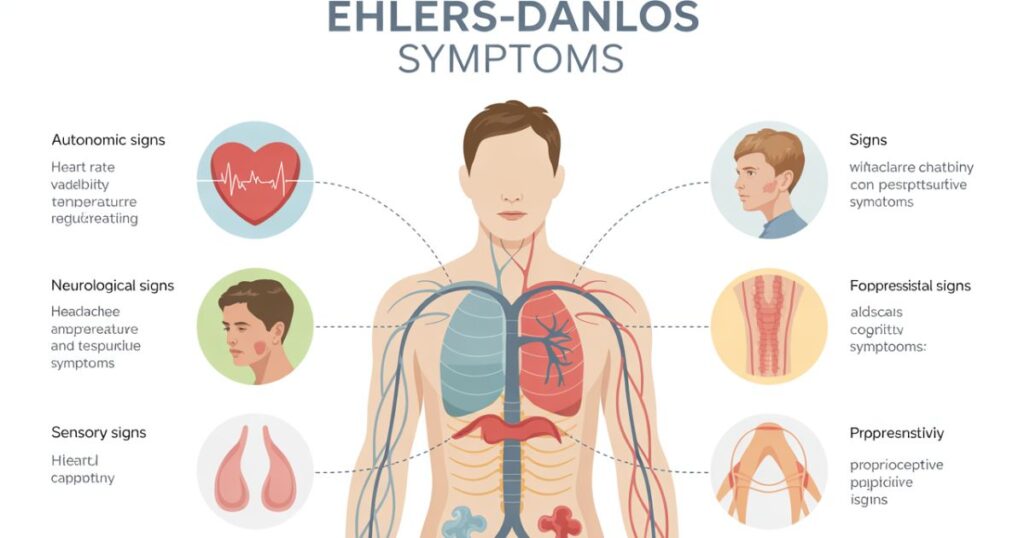
Many people who grew up with Ehlers-Danlos Syndrome remember moments of dizziness that never made sense. Standing up too fast often caused dizziness on standing, seeing sparkles, or even fainting episodes. As children, they were told they stood “too quickly,” but today we know many of these symptoms are signs of orthostatic intolerance or early POTS (Postural Orthostatic Tachycardia Syndrome). These conditions often show up in people with a connective tissue disorder because their blood vessels lack the support needed to maintain steady circulation. You may also recall feeling hot far more easily than other kids. Temperature swings, sweating issues, or simply overheating during mild activity all point toward dysautonomia, a nervous system imbalance common in people with hypermobile EDS (hEDS) and other forms of genetic connective tissue conditions.
Also Read This Blog: Health Threetrees Com VN
Neurological symptoms often appeared quietly during childhood and followed you into adulthood. Migraines, chronic headaches, and trouble sleeping were common, yet many doctors dismissed these concerns instead of exploring the real cause. You may have struggled with sensory processing issues, finding noises too loud or lights too bright, or you experienced proprioception dysfunction that made your body feel “off balance.” Many children with EDS are also diagnosed with ADHD, but research now shows part of this may be connected to chronic pain, constant fatigue, or subtle blood-flow changes caused by their collagen disorder. Emotional challenges often developed too, especially anxiety and depression, which can appear when a child grows up constantly misunderstood. When your body behaves differently and no one believes you, the emotional toll becomes part of your daily life. Sleep troubles, restless nights, and ongoing fatigue or chronic fatigue shape much of the childhood experience for many people with EDS.
Digestive, Immune & Other Systemic Signs
Digestive struggles often begin early for children living with a genetic connective tissue condition. Many remember stomach aches that happened without warning, or days where they felt sick after almost every meal. These problems are now recognized as common digestive issues that mimic IBS-like symptoms. Kids with EDS may battle constipation, bloating, nausea, or acid reflux, but because they look healthy, doctors often fail to connect these symptoms to a deeper issue. You might recall long stretches of abdominal discomfort without answers. Some people later discover they had mild gastroparesis, food sensitivities, or gastrointestinal dysmotility, which are linked to weakened connective tissue in the digestive tract. For many, this becomes one of the lifelong challenges of EDS, impacting diet, energy, and overall comfort.
Some children with EDS also develop internal symptoms that seem unrelated at first. Strange chest pains, fluttery heartbeats, or unexplained fatigue may have been early signs of heart problems, including mild heart valve issues sometimes seen in classical Ehlers-Danlos Syndrome (cEDS) or even the rare vascular EDS (vEDS). Although serious complications like aortic aneurysm risk are not common in every subtype, understanding these early clues helps families find the right specialists such as cardiologists or geneticists. Many adults now realize their childhood symptoms were not random. They were early hints of a collagen disorder, and knowing this creates a clearer picture of how their entire body was affected long before anyone recognized their inherited condition.
Childhood Behaviors & Coping Strategies You Didn’t Realize Were EDS
Growing up with Ehlers-Danlos Syndrome often meant developing unusual habits to cope with your body. Many children became known as the “clumsy child” or always the one with frequent injuries. Sitting differently, like W-sitting or curling into odd positions, helped stabilize joint hypermobility without realizing it. Everyday tasks felt harder because of difficulty keeping up physically, poor balance, or delayed motor milestones, yet friends and teachers didn’t understand. Some children learned party tricks with joints, like bending fingers backward, simply because flexibility came naturally. While these tricks seemed fun, they often masked deeper symptomatic hypermobility and joint instability.
Other coping strategies were more subtle. Children often became sensitive to clothing tags / textures or avoided playground activities because they felt exhausted faster. Many felt different from peers or were labeled as the “sick kid”, particularly if they experienced frequent sprains, strains, or orthopedic issues. Medical professionals sometimes dismissed complaints, a phenomenon now recognized as medical gaslighting. Simple activities, like running, jumping, or using scissors, revealed difficulty with fine motor skills, poor handwriting, or grip weakness. Recognizing these behaviors now can help adults understand that their childhood challenges were early signs of a hypermobile spectrum disorder, connective tissue disorder, or another form of genetic connective tissue condition.
What to Do If These Signs Sound Familiar
If these signs sound familiar, the first step is to start symptom documentation. Keeping a detailed record of joint hypermobility, skin issues, and other early symptoms helps specialists connect the dots. Many people consult a rheumatologist, geneticist, or EDS specialists to begin a proper EDS diagnosis using clinical criteria, the Beighton score, and sometimes genetic testing. Understanding your family history of EDS is also essential, as many subtypes are an inherited condition or linked to a genetic mutation. Early evaluation reduces the risk of mismanagement and provides clarity, especially for those who experienced misdiagnosis in childhood.
Additionally, seeking a multidisciplinary approach improves outcomes. Working with physical therapy for EDS, occupational therapy, and even consulting on joint protection techniques ensures safer movement. Adults and children benefit from learning pain management strategies, bracing and supports, or mobility aids to prevent injuries. Lifestyle modifications, including avoiding high-impact sports and practicing pacing strategies, can dramatically improve quality of life. Connecting with support groups or online communities also validates experiences of living with an invisible illness, reducing feelings of isolation and building a network of understanding peers.
Living Well With Ehlers-Danlos Syndrome
Living with Ehlers-Danlos Syndrome (EDS) doesn’t mean giving up on an active life. Many people find that a combination of lifestyle modifications, physical therapy for EDS, and stability exercises dramatically improves mobility and reduces pain. Using joint protection techniques, bracing and supports, and occupational therapy can help manage daily activities safely. Even simple adjustments like pacing activities and incorporating rest periods make a noticeable difference, especially for those with chronic pain disorder, fatigue / chronic fatigue, or symptomatic hypermobility.
Emotional health is equally important. Living with a genetic connective tissue condition can bring mental health challenges like anxiety and depression, feeling misunderstood, or the stress of living with an invisible illness. Joining support groups, talking to therapists, or connecting with the EDS community helps validate experiences and provides practical strategies. With proactive management, you can enjoy hobbies, work, and social life while minimizing injuries and improving your overall quality of life.
Conclusion
Recognizing the 23 signs you grew up with Ehlers-Danlos Syndrome can be life-changing. From joint hypermobility and frequent subluxations to soft or “velvety” skin, dizziness on standing, and digestive issues, childhood experiences often point to an underlying connective tissue disorder. Understanding your past helps with diagnosis, guides treatment, and connects you with supportive communities.
Early awareness, proper EDS diagnosis, genetic counseling, and consistent management through physical therapy, pain management strategies, and lifestyle modifications can dramatically improve daily life. Remember, you are not alone validation, education, and support can help you thrive despite living with a genetic connective tissue condition. Childhood struggles, unusual flexibility, or feeling like the “sick kid” were not your fault they were early signals of a condition that can now be understood, managed, and lived with confidently.
FAQs
Q: What are lesser known symptoms of EDS?
Lesser known symptoms include dizziness on standing, temperature regulation issues, digestive problems, and sensory processing difficulties.
Q: Does collagen help EDS?
Collagen supplements may support joint and skin health, but they cannot cure EDS, as it is a genetic connective tissue condition.
Q: What kind of doctor diagnoses Ehlers-Danlos?
Geneticists and rheumatologists experienced in connective tissue disorders usually diagnose EDS using clinical criteria and genetic testing.
Q: Does EDS cause mental illness?
EDS doesn’t directly cause mental illness, but chronic pain, fatigue, and feeling misunderstood can lead to anxiety and depression.
Q: What personality disorder does Ehlers-Danlos syndrome have?
EDS is not linked to a specific personality disorder, though patients may develop coping behaviors due to chronic illness stress.