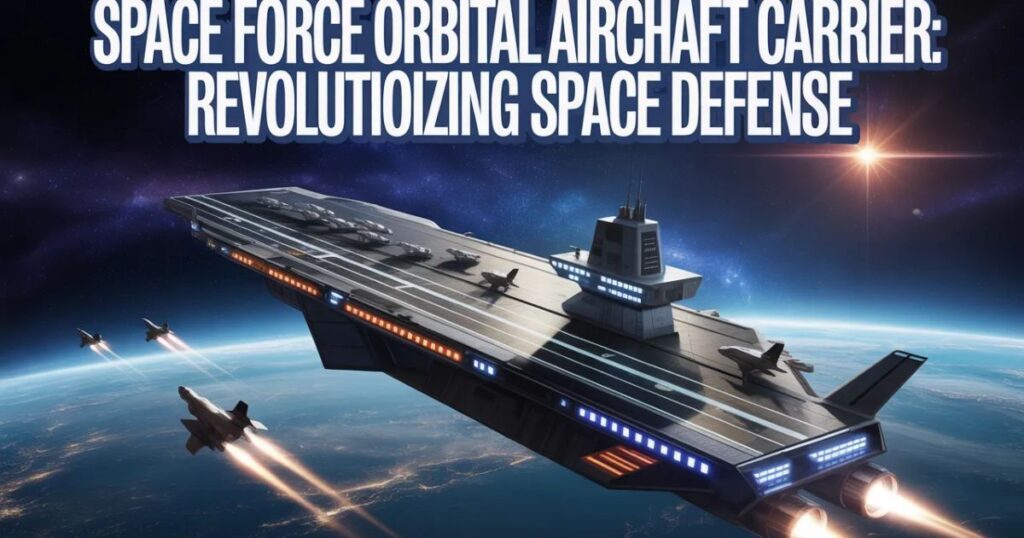
The Space Force orbital aircraft carrier is a revolutionary concept that could reshape military operations in space. As the U.S. Space Force continues to advance its capabilities, the idea of a mobile orbital platform capable of deploying and servicing satellites is gaining traction. This orbital aircraft carrier would act as a dynamic launchpad in space, offering unprecedented flexibility for rapid deployment and tactical response to space-based threats.
Unlike traditional space stations, this platform would be able to maneuver in orbit, positioning itself for strategic advantages. While still in the early stages, the Space Force orbital carrier could drastically enhance the U.S. military’s space defense posture in the coming decades.
What is the Space Force’s Orbital Aircraft Carrier?
A Space Force orbital aircraft carrier is a space-based military asset designed to act as a mobile platform capable of launching and servicing smaller spacecraft. This carrier would not be involved in direct combat but would provide essential support for satellite defense, orbital surveillance, and rapid deployment in space. The core function of an orbital carrier would be to project military power by deploying small maneuverable drones, satellite repair units, and tactical response vehicles. Unlike the International Space Station, which remains in a fixed orbit, the orbital carrier would need the ability to maneuver and reposition itself to respond quickly to emerging threats.
The Space Force orbital aircraft carrier would also serve as a forward operating base for satellites, ensuring quick deployment in various orbital planes without needing to launch from Earth. By offering this flexibility, the orbital carrier could be a game-changer in the way the U.S. military operates in space.
Space Force’s Partnership with Gravitics: Paving the Way for Space Launch Platforms
The U.S. Space Force has teamed up with Gravitics, a cutting-edge aerospace company, to develop the orbital carrier. This partnership is pivotal to creating a viable solution for rapid space deployment. Gravitics has been chosen to work on the orbital aircraft carrier project and is focused on designing the carrier using modular construction techniques. The development of this space aircraft carrier will require substantial investment and technological innovation to ensure that it can be safely built, maintained, and operated in space.
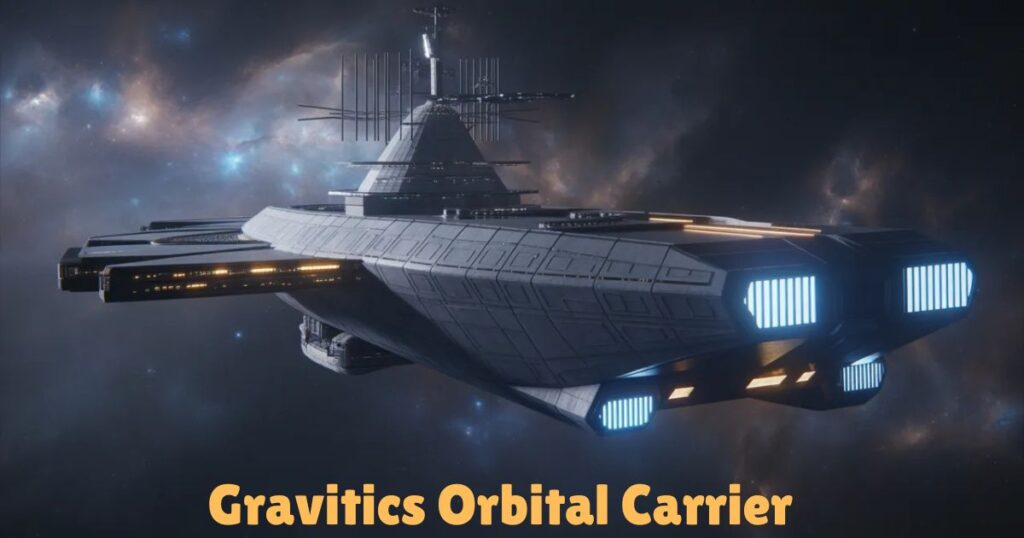
The partnership with Gravitics also extends beyond the carrier itself, as the company is making strides in creating Gravitics space stations and other orbital infrastructure. The Gravitics orbital carrier is one of the first steps toward making these space-based platforms a reality. The project represents a significant advancement in orbital aircraft carrier development and could lead to the creation of other space assets capable of enhancing U.S. military power in orbit.
Engineering Challenges: Building an Aircraft Carrier in Space
Constructing an orbital aircraft carrier comes with immense engineering challenges. The sheer size and complexity of such a platform would dwarf even the International Space Station (ISS). Building a Space Force orbital aircraft carrier requires a modular assembly process, as no current rocket technology can launch a platform of that scale into space in one go. This means that the orbital carrier would need to be assembled piece by piece in orbit, using autonomous robots and advanced machinery.
One of the most significant Space Force orbital carrier engineering hurdles is the issue of space debris. Every launch or construction phase increases the risk of colliding with existing debris in orbit, which could compromise the mission. Moreover, assembling a platform of this scale requires intricate modular space construction and assembly techniques, relying heavily on robotics to minimize human risk. The costs involved in launching and assembling such a structure would be astronomical, potentially making it one of the most expensive military projects ever undertaken.
Why the Orbital Aircraft Carrier is a Game-Changer for the Space Force
The Space Force orbital aircraft carrier has the potential to revolutionize military space operations. This space carrier would provide the U.S. Space Force with unprecedented flexibility and speed to respond to space-based threats. The orbital carrier’s ability to rapidly deploy smaller spacecraft would drastically improve the Space Force’s response time to satellite defense and other space-related operations.
In addition to enhancing the Space Force orbital carrier and rapid deployment, this technology could also improve the speed and agility of military missions in space. Unlike traditional ground-based launch platforms, the orbital carrier can quickly reposition itself in different orbital planes, providing an ever-ready launch platform for a variety of military missions. This added mobility would make it much harder for adversaries to anticipate or attack, giving the U.S. Space Force a significant strategic advantage.
The Economic and Strategic Realities of Space Force’s Orbital Carrier
Building and maintaining a Space Force orbital aircraft carrier comes with high costs. The cost of constructing an orbital aircraft carrier is expected to be in the trillions of dollars. Given the massive scale of the project and the need for continuous investment in research, development, and technology, the price tag could be far higher than any other space-related military project to date. However, these costs would be justified if the orbital carrier can enhance the U.S. Space Force’s military presence in space and provide long-term strategic advantages.
Strategically, the orbital carrier could provide the U.S. Space Force’s response to space-based threats in ways that were previously impossible. But such a high-value asset would also be a vulnerable target in space. Any enemy could potentially target and destroy the carrier, which would result in significant losses. To mitigate this risk, some experts suggest creating a distributed network of smaller, cheaper space assets instead of concentrating all military capabilities in a single carrier. The concept of using space-based assets in a mosaic configuration is gaining traction as a more resilient and cost-effective solution for space dominance.
The Future of the Space Force: What Comes Next for Space Operations?
The Space Force is already on the path to creating the orbital aircraft carrier, but the future of space military operations goes beyond just this project. As space technology continues to evolve, the U.S. Space Force will need to develop advanced propulsion systems for space carriers, life support systems, and defensive capabilities to ensure the safety and success of such a high-profile military asset. Nuclear propulsion for space-based assets is already being explored, which could help power the orbital carrier for extended missions in space.
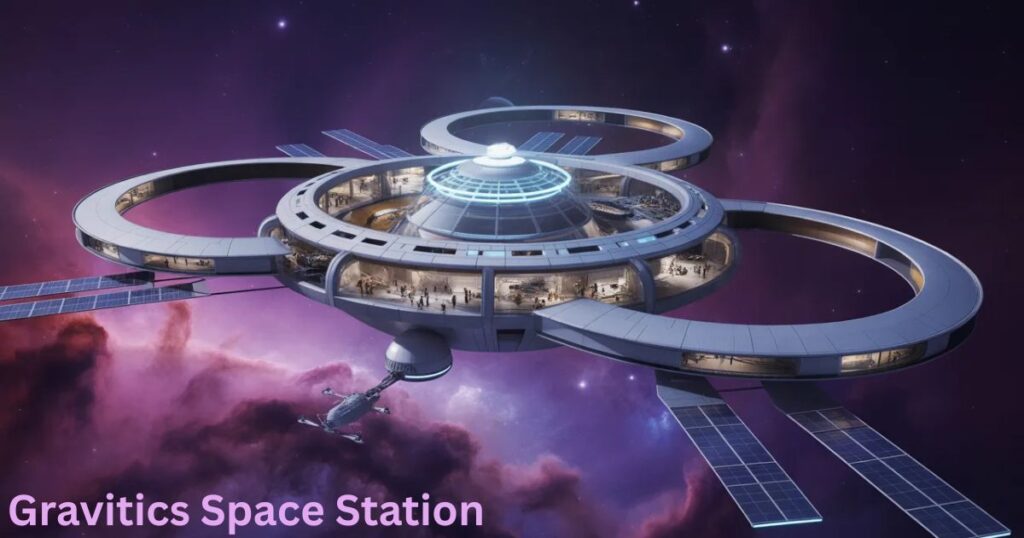
In the future, the Space Force might rely on a mix of robotic automation, artificial intelligence, and nuclear propulsion to push the boundaries of what is possible in military space operations. Other projects, like Gravitics space station and orbital surveillance platforms, will contribute to the growth of military operations in space. Space Force’s response to space-based threats will continue to evolve, and new space-based defense capabilities will emerge as technology advances.
FAQs
Q. What is an orbital carrier?
An orbital carrier is a space-based platform designed to deploy, service, and recover spacecraft while operating in Earth’s orbit.
Q. What is the most advanced aircraft carrier in the world?
The most advanced aircraft carrier in the world is the USS Gerald R. Ford (CVN-78), known for its cutting-edge technology and capabilities.
Q. Is the Space Force building a space carrier?
Yes, the Space Force is working on developing an orbital aircraft carrier to support military operations in space.
Q. Does Space Force have any planes?
While the Space Force does not operate traditional aircraft, it focuses on spacecraft and satellite operations for defense and communication.
Q. What are the four types of carriers?
The four main types of aircraft carriers are nuclear-powered, amphibious assault, light carriers, and supercarriers.