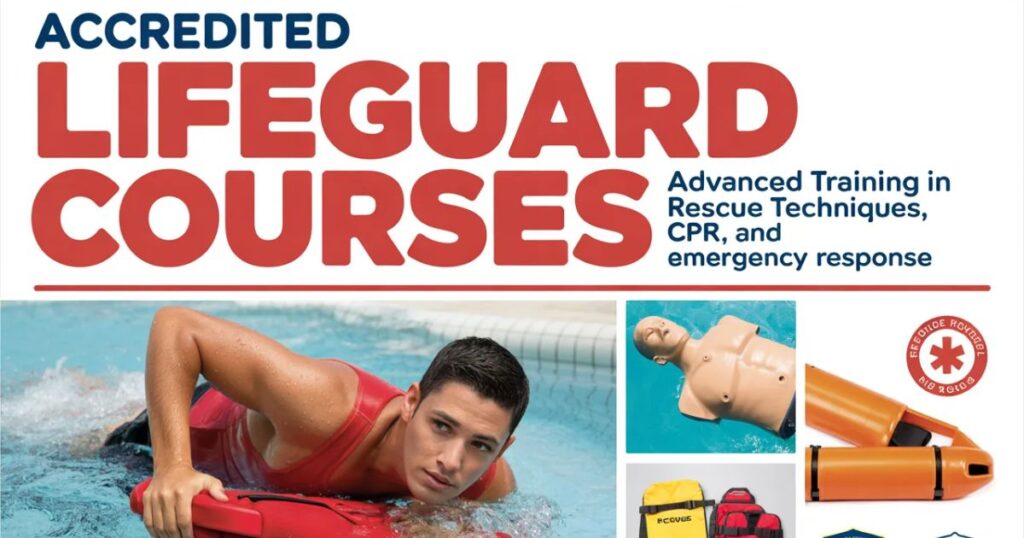
Lifeguard courses do not just teach how to swim well. They focus on real life safety skills. Which are useful in preventing accidents and saving lives. It gives a person peace of mind in both physical and mental situations. After learning it, he becomes stronger, with the help of which he can easily face the difficulties of every situation. This course gives people the confidence to respond when the situation is serious. From understanding water conditions to dealing with emergencies, it has proven to be effective in all situations. It is not just training but also responsibility.
ALA Highlights Rising Risks at Florida Beaches Amid the Record Easter Travel Surge
More than two dozen people were rescued from dangerous rip currents along Broward County beaches, according to a recent report. This poses a serious threat to coastal protection. It is a cause for great concern for everyone. According to the report, nearly 40 people were rescued in a single day in Fort Lauderdale and Pompano Beach, including children and families who were quickly caught in dangerous ocean conditions. Several victims required hospitalization, indicating the severity of these incidents and the increased risks associated with crowded beach environments.
Rip currents are often misunderstood, and that lack of knowledge leads to tragedy. Most people think these currents pull you under the water. They do not. They pull you away from the beach. Even strong swimmers get caught in this trap and try to fight the water. This leads to instant exhaustion and panic.
The American Lifeguard Association highlights recent rescues, like those in Broward County, to show how fast things turn dangerous. If you get caught, do not swim toward the shore. You will lose that battle. Instead, stay calm and swim parallel to the coastline. Once you feel the pull weaken, you can angle back to safety.
Local rescue officials and ALA experts agree on this simple rule: flip, float, and follow the shore. Understanding the mechanics of the water is the difference between a close call and a fatal accident. Keep your lungs full of air, keep your head, and move sideways until the current let’s go.
Water Rescue Techniques
The lifeguard course teaches specific maneuvers for various victim types.
- Front Rescue. You approach a conscious victim from the front. You push the rescue tube into their chest to provide buoyancy.
- Rear Rescue. You approach from behind. You reach under the victim’s armpits to secure them to the tube.
- Submerged Victim Recovery. You use a surface dive to reach the bottom. You bring the unconscious person to the surface using a cross chest carry.
- Spinal Stabilization. You practice the head splint technique in shallow and deep water. This prevents further injury during extraction.
Medical Response and CPR Training
A comprehensive lifeguard course includes professional level CPR and First Aid. You learn to recognize respiratory and cardiac arrest. You practice chest compressions and ventilations on specialized manikins.
The American Lifeguard Association teaches the use of an Automated External Defibrillator. Applying an AED within three minutes of cardiac arrest increases the victim’s survival chance to 70 percent. You also learn to manage severe bleeding, bone fractures, and allergic reactions using an epinephrine auto injector.
Waterpark and Shallow Water Skills
The American lifeguard course offers specialized tracks for different environments. Shallow water training is for pools under five feet. Waterpark training covers wave pools and slide dispatch. You learn to manage high patron volumes. You practice rescues in turbulent water. These endorsements make you a more versatile candidate for employment at large resorts.
Essential Rescue Gear Mastery
You must become proficient with the tools provided at your facility.
- Rescue Tubes. These provide flotation for multiple people.
- Whistles. You use different signals to communicate with guards and patrons.
- Resuscitation Masks. These allow you to provide oxygen while protecting yourself from pathogens.
- Bag Valve Masks. These provide higher oxygen concentrations during two-person CPR.
- Backboards. These are mandatory for safe spinal extractions.
Conclusion
- Training prepares individuals to manage emergencies safely.
- Training includes CPR, first aid, and water rescue skills.
- Lifeguard course enhances confidence and physical fitness.
- Certified lifeguards have career opportunities in pools, beaches, and water parks.
- Overall, lifeguard training is essential for anyone interested in water safety and rescue skills.